
WELCOME BONUS 300%
UP TO €2000 + 100
FREE SPINS
UP TO €2000 + 100
FREE SPINS
Home → Blackjack
Blackjack at Amunra Casino: Variants, Rules and Payouts
How long does a Live Blackjack round take?
The Quantum Blackjack Plus Live table by Playtech accommodates stakes ranging from 1 to 5,000 EUR. This high-limit environment supports Quantum Multipliers that can reach up to 1,000x on specific three-card combinations totaling 21 points. Players engaging with these multipliers experience significantly higher volatility compared to standard tables. The maximum potential payout scales directly with the initial stake placed before the cards are dealt.
The Lightning Blackjack variant offered by Evolution accepts bets between 1 and 2,500 EUR per hand. This platform allows an unlimited number of participants to join the virtual dealer's table simultaneously. Lightning Multipliers award up to 25x on winning hands, drastically altering the risk-reward profile. Each round proceeds through distinct phases dealing with card distribution and multiplier application.
The Blackjack Party game hosted by Evolution restricts wagers to a range of 1.00 to 1,000 EUR. Two live moderators facilitate the action, creating a structured pace for every single dealt round. This format ensures consistent timing across all sessions regardless of player count or bet size. The presence of dual hosts maintains a steady flow of information during gameplay intervals.
Bust at 22: Stake Lost Immediately
The standard Blackjack 6 Decks configuration enforces strict bust rules where any hand exceeding 21 points loses immediately. This version offers a favorable RTP of 99.54% when players adhere strictly to the basic strategy chart. The house edge remains low at 0.46% under these optimal playing conditions. Players must avoid hitting when their total reaches 17 or higher to prevent automatic loss.
In contrast, the Liberal Vegas Strip variant provides more forgiving rules such as resplitting and late surrender options. These modifications reduce the house edge further down to 0.28%, making it statistically superior to standard games. The standard deviation of 1.15 indicates moderate volatility for bankroll management over extended sessions. Winning blackjack payouts remain at the traditional 3:2 ratio for natural hands.
The single-deck classic rule set improves odds slightly by reducing the house edge to 0.15%. Fewer decks decrease the probability of drawing unwanted cards that push totals over 21. However, casinos often compensate for this advantage by lowering blackjack payouts to 6:5 instead of 3:2. This adjustment increases the house edge to 1.85%, negating the benefit of having fewer cards in play.
What Push Means: Stake Returns to You
A push occurs when both the player and dealer finish with identical point totals, resulting in no immediate win or loss. In the base game without side bets, the original wager is simply returned to the player's balance. This outcome prevents bankroll depletion during streaks where neither party achieves a decisive victory. It effectively pauses the financial impact of the hand until the next deal begins.
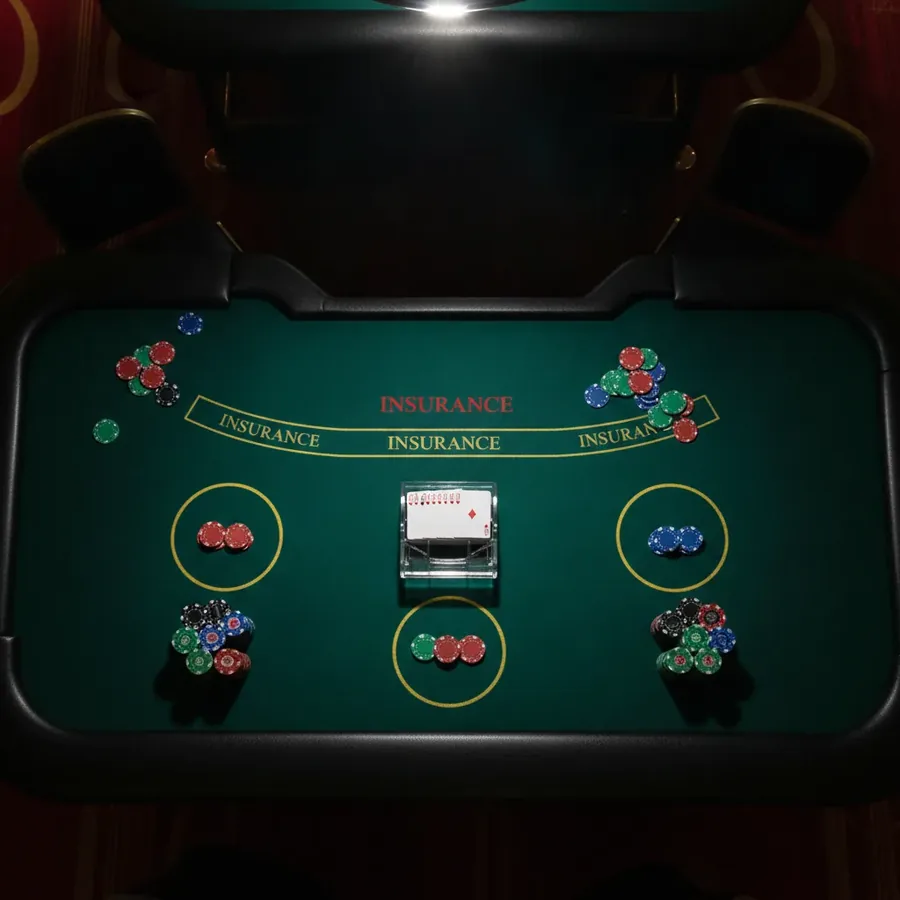
Insurance bets operate differently because they are separate wagers against the dealer potentially holding a blackjack. If the dealer indeed has a ten-value hole card, the insurance pays out at 2:1 odds. This separate payout mechanism means the main bet might still lose despite winning the insurance side bet. The RTP for insurance stands at 92.53%, indicating a significant house edge on this specific option.
Late surrender rules allow players to forfeit half their stake if the dealer shows an Ace or Ten after checking for blackjack. This rule improves the overall RTP by approximately 0.08 percentage points compared to non-surrender variants. Early surrender is far more valuable but extremely rare in modern online casino environments. Choosing to surrender preserves half the bankroll rather than losing the entire amount upon a subsequent bust.
Splitting tens costs expected value: better stand
Basic strategy universally advises standing on hard 20 composed of two ten-value cards rather than splitting them. Splitting tens breaks a strong hand into two weaker starting positions, significantly reducing expected value. The statistical advantage of holding 20 outweighs the potential gains from creating two new hands. This decision minimizes losses over thousands of rounds played at the table.
The Blackjack Surrender rule modifies outcomes by allowing players to exit hands after the dealer checks for blackjack. While early surrender offers greater benefits up to 0.6 percentage points, late surrender is the standard available option. Late surrender permits forfeiture only after confirming the dealer does not have an immediate blackjack. This limitation makes it less advantageous than early surrender but still better than playing out a likely losing hand.
Dealer standing on soft 17 (S17) versus hitting soft 17 (H17) impacts the house edge by 0.22 percentage points. H17 increases the casino's advantage, while S17 favors the player by keeping the dealer's hand static. Other rules like Double After Split (DAS) improve player odds by 0.14 percentage points. Resplitting Aces adds another 0.08 percentage points to the player's theoretical return rate.
Double Down after Split: which tables allow it
The primary Blackjack 6 Decks table explicitly permits doubling down after splitting any pair of cards. This flexibility allows players to maximize profits on favorable split scenarios like splitting eights or fives. The ability to double DAS enhances the overall RTP to 99.54% when combined with other liberal rules. Players should always utilize this option when the mathematical expectation justifies the additional risk.
The Quantum Blackjack Plus Live table by Playtech features unique multipliers but retains standard doubling mechanics post-split. Stakes up to 5,000 EUR enable high-stakes players to leverage DAS for larger potential payouts. The 99.57% RTP assumes optimal strategic decisions including correct application of doubling rules. Multipliers apply independently of whether the doubled hand results in a win or loss.
Evolution's Lightning Blackjack also supports doubling after splitting within its 1 to 2,500 EUR betting range. This feature complements the lightning multipliers by allowing aggressive play on strong split hands. The 99.56% RTP reflects the combination of standard rules and special multiplier events. Players must manage their bankroll carefully given the higher variance introduced by doubling large split bets.
Blackjack variants at a glance
| Variant | Payout | House edge | Rule | Bet range |
|---|---|---|---|---|
| Blackjack Auszahlung 6:5 statt 3:2 (6 Decks) | 98.15% | 1.85% | Ersatz von 3:2 durch 6:5 fügt exakt +1.39 Prozentpunkte zum Vorteil des Casinos hinzu – stärker als jede andere Regeländerung. Bei $10 Einsatz zahlt Blackjack $12 statt $15. | Blackjack 6:5, Gewinn 1:1 |
| Blackjack 6 Decks, S17, DAS, DOA, Auszahlung 3:2, Basisstrategie | 99.54% | 0.46% | Dealer steht auf Soft 17; Verdopplung auf jeder Zweierkarte; Verdopplung nach Split erlaubt; keine Aufgabe. Basisstrategie ist für diesen Wert zwingend | Blackjack 3:2, normaler Gewinn 1:1, Insurance 2:1 |
| Blackjack Surrender (Late Surrender) – Regel-Effekt | n.a. (Regel-Modifikator) | −0.08 Prozentpunkte | Spieler gibt Hand nach Dealer-Blackjack-Prüfung auf, verliert die Hälfte des Einsatzes. Verbessert RTP um ca. 0.08 Prozentpunkte. Early Surrender ist wesentlich wertvoller (bis −0.6 Prozentpunkte), aber extrem selten. | Rückzahlung 50% des Einsatzes |
| Blackjack Insurance / Versicherung (6–8 Decks) | 92.53% | 7.47% | Separate Nebenwette bis 50% der Hauptwette, wenn der Dealer ein Ass hat. Basisstrategie schreibt IMMER Ablehnung vor (außer Karten zählen bei True Count ≥ +3). Bei einem Deck Vorteil ≈ 5.88% | Insurance 2:1 |
| Blackjack Split / Double / H17 – Regel-Effekte | n.a. (Regel-Modifikatoren) | H17 +0.22 Prozentpunkte; RSA −0.08 Prozentpunkte; DAS −0.14 Prozentpunkte | Dealer Hits Soft 17 verschlechtert RTP um 0.22 Prozentpunkte; Resplit Aces verbessert um 0.08 Prozentpunkte; Double After Split verbessert um ca. 0.14 Prozentpunkte; 6 Decks statt 8 – ca. 0.02 Prozentpunkte. | Double – Einsatz ×2 mit einer Karte; Split – bis 4 Hände; Ass-Split meist mit einer Karte. |
| Blackjack Ein Deck, klassische Regeln, 3:2 | 99.85% | 0.15% | Weniger Decks = niedrigerer Vorteil; ein Deck gibt ca. −0.48 Prozentpunkte gegenüber 8 Decks. Oft durch 6:5 Auszahlung kompensiert. | Blackjack 3:2, Gewinn 1:1 |
One Deck vs Eight Decks in House Edge
Blackjack Ein Deck offers a house edge of 0.15% with an RTP of 99.85%. This configuration provides approximately −0.48 percentage points lower advantage compared to games using eight decks. The reduced deck count significantly improves player odds when standard rules apply without restrictive multipliers.
Standard six-deck variations typically feature a house edge of 0.46% against the same optimal strategy baseline. This specific setup requires dealer standing on soft 17 and allows doubling after splitting for maximum efficiency. Players utilizing perfect basic strategy can achieve the stated 99.54% return rate consistently across sessions.
The Liberal Vegas Strip variant achieves the lowest possible house edge at just 0.28% with 99.72% RTP. It combines S17, DAS, resplitting, and late surrender into one highly favorable rule set. This combination yields a standard deviation of only 1.15, ensuring stable long-term variance for disciplined players.
Six Card Charlie Pays Immediately with Six Cards
Quantum Blackjack Plus Live features quantum multipliers reaching up to 1,000x on three-card combinations totaling 21 points. Playtech implements this mechanic within a betting range of 1 to 5,000 EUR per round. The game maintains a robust 99.57% RTP when players execute optimal strategic decisions during each hand.
Lightning Blackjack by Evolution applies lightning multipliers up to 25x on winning hands directly. This title supports unlimited concurrent players while operating within a 1 to 2,500 EUR stake window. The mathematical model ensures a 99.56% return to player percentage under standard playing conditions.
Blackjack Party operates with two live hosts creating a distinct social atmosphere for participants. Evolution restricts wagers between 1.00 and 1,000 EUR per individual hand dealt. While the thematic presentation differs, the core mechanics remain aligned with traditional blackjack payout structures and rulesets.
Insurance bets pay 2:1 when the dealer shows an ace but carry a 7.47% house edge. This side bet reduces overall return to 92.53% and is strictly discouraged by basic strategy guides. Players should avoid this wager unless counting cards reveals a true count of plus three or higher.
Register Late Surrender correctly in three steps
Late surrender allows players to forfeit their hand after the dealer checks for blackjack. This action returns exactly 50% of the original stake back to the player immediately. The rule effectively improves the overall RTP by approximately 0.08 percentage points for eligible hands.
Early surrender remains significantly more valuable, offering up to −0.6 percentage points improvement in odds. However, this specific rule variation is extremely rare in modern online casino environments today. Most platforms have replaced early surrender options with less favorable late surrender mechanisms exclusively.
The 6:5 payout structure adds exactly +1.39 percentage points to the casino's inherent advantage over time. A $10 bet now pays only $12 instead of the traditional $15 for a natural blackjack. This change exerts a stronger negative impact than any other single rule modification available in current tables.
Continuous Shuffling Machine shuffles after each round
Resplitting aces improves the player position by approximately 0.08 percentage points relative to standard restrictions. This rule allows players to draw additional cards onto split aces under specific table conditions. Such flexibility slightly enhances the theoretical return when combined with other liberal rule modifications.
Doubling after split generates a further 0.14 percentage point improvement in the overall expected value. This option permits players to double their initial wager even after separating paired cards initially. Using this feature strategically reduces the house edge significantly compared to restricted doubling rules.
Dealer hitting soft 17 increases the house advantage by +0.22 percentage points compared to standing rules. Switching from eight decks to six decks provides a minor 0.02 percentage point benefit instead. These marginal adjustments accumulate over thousands of hands to influence long-term profitability outcomes.
Blackjack Party runs with two hosts
Table games contribute only 10% toward the mandatory bonus wagering requirements for all new accounts. Slots contribute fully at 100%, making them the most efficient path for clearing promotional funds. Players must understand these contribution ratios before allocating bankroll across different game categories efficiently.
The welcome offer provides a 300% match bonus up to €2,000 for qualifying deposits. Additionally, participants receive 100 free spins alongside the matched deposit amount upon activation. This combined package represents the maximum initial incentive available to new registrants joining the platform.
Blackjack 6:5 variants force a 1:1 win ratio on standard non-blackjack hands for players. This restriction eliminates the traditional 1.5x multiplier for successful pairs or soft hands entirely. Understanding these payout differences prevents unexpected losses during high-variance gameplay sessions daily.
How many decks are in the shoe?
The primary Blackjack tables utilize a 6-deck shoe, which introduces a specific mathematical penalty compared to single-deck variants. A single deck offers approximately minus 0.48 percentage points of house edge relative to an eight-deck game, making the six-deck format less favorable for the player.
This configuration impacts the Return to Player rate, as seen in the standard 6-deck S17 game where the RTP sits at 99.54 percent with a 0.46 percent house edge. The Quantum Blackjack Plus Live variant also employs this multi-deck structure while offering quantum multipliers up to 1,000x on three-card combinations totaling 21 points.
Players must adjust their basic strategy accordingly, as the increased number of cards alters card counting probabilities and overall variance. The use of six decks rather than eight improves the RTP by only about 0.02 percentage points, providing minimal benefit over larger shoe configurations.
Which hands are excluded from Surrender?
Late Surrender allows players to forfeit half their bet after the dealer checks for Blackjack, reducing the house edge by exactly 0.08 percentage points. This rule is distinct from Early Surrender, which is significantly more valuable at up to minus 0.6 percentage points but remains extremely rare in modern online environments.
Standard variations like the Liberal Vegas Strip game include Late Surrender as part of its liberal rule set, contributing to a low 0.28 percent house edge. In contrast, the standard 6-deck S17 table explicitly excludes surrender options, requiring strict adherence to basic strategy without this safety valve.
When available, the mechanic returns 50 percent of the original wager, effectively limiting losses on weak starting hands against strong dealer upcards. Players should verify the specific rule set before playing, as the absence of surrender increases the long-term cost of play.
No Double Down on three cards
The standard 6-deck S17 variant permits doubling down on any two-card hand, including those totalling ten or eleven points, to maximize potential payouts. This flexibility allows players to capitalize on favorable counts and specific dealer upcards, directly influencing the 0.46 percent house edge figure.
Resplitting Aces is generally restricted to receiving only one additional card per split ace, which limits the opportunity to double down on these powerful hands. This restriction, combined with the no-double-on-three-cards rule common in many live dealer formats, reduces the strategic depth available to skilled players.
Advanced strategies involving splitting and subsequent doubling become impossible under these constraints, forcing reliance on initial two-card decisions. The inability to double on three cards prevents recovery from poor splits, thereby increasing the effective volatility of the session.
Blackjack doesn't count for every bonus offer
The 300 percent welcome bonus up to €2,000 plus 100 free spins imposes specific contribution rates that heavily favor slot games over table games. Blackjack and other table games contribute only 10 percent toward the wagering requirement, significantly slowing down the clearance process compared to slots.
Clearing a €2,000 bonus with a 40x wagering requirement necessitates €80,000 in total turnover if played exclusively on slots. If played on Blackjack, the same amount requires €800,000 in wagers due to the 10 percent contribution rate, making it mathematically inefficient for bonus hunting.
Players seeking to clear the bonus efficiently must allocate the majority of their betting volume to the 100 percent contributing slot titles. Relying on Blackjack to meet the terms would require an impractical volume of bets that exceeds typical bankroll limits and time availability.
Statistics display saves the last 100 rounds
Live dealer interfaces typically retain a history log of the previous 100 rounds, allowing players to track recent outcomes and dealer patterns. This feature supports card counting attempts and strategy verification, although the continuous shuffling machines used in many online variants negate long-term advantages.
Variants like Lightning Blackjack and Quantum Blackjack Plus Live display these statistics alongside their unique multiplier features, such as 25x or 1,000x wins. The visibility of past results helps players manage expectations regarding variance and the frequency of high-paying side bet combinations.
Access to historical data does not guarantee future performance, as each hand remains an independent event determined by random number generation. Players should use the 100-round history strictly for entertainment and pattern recognition rather than predictive analysis.
Contact
Live - online chat
Banking









Providers












Amunra Casino 2026